Thursday, March 19, 2020

A Journal of My Plague Week

Defoe Journal of the Plague Year.jpg
Not quite a year, and (let's hope) not quite a plague.

In 1665, London experienced an outbreak of bubonic plague, the same disease behind the "Black Death" that had devastated Europe a few centuries before. Over 18 months, 100,000 Londoners -- about a fourth of the city's population at the time -- died from it, despite widespread closure and quarantining measures. (One such closure, of Cambridge University, forced student Isaac Newton into self-taught homeschooling, during which he developed his theory of gravity, among other things.) Several decades later, in 1722, author Daniel Defoe (of Robinson Crusoe fame) published A Journal of the Plague Year, a deeply-researched account (arguably one of the world's first novels) of life in London during that horrible time.
Here, I have no pretensions to be anywhere near as exhaustive, as my far more modest title should suggest. Nor will I attempt to feign expertise. But the sheer weirdness of the 2020 outbreak of COVID-19, the fact that it has already affected my life in several ways, and -- perhaps here pretension sneaks back in --  the desire to create an account for myself and for others (present and future) all compel me to describe the first week that this novel coronavirus has actually affected my life.

***

Throughout January and February, as the virus began its journey from a wet market in Wuhan, Hubei Province, China to America, I vaguely followed news of its spread from afar. But it was not always my foremost concern. I spent most of January and February preparing to move from Washington, D.C. to New York City for a new job, actually moving there, and then getting used to my new life. Because of this, and the fact that it had not yet come to America, I didn’t pay much attention to it. Only when American cases began to appear did it become more than a secondary concern for me.

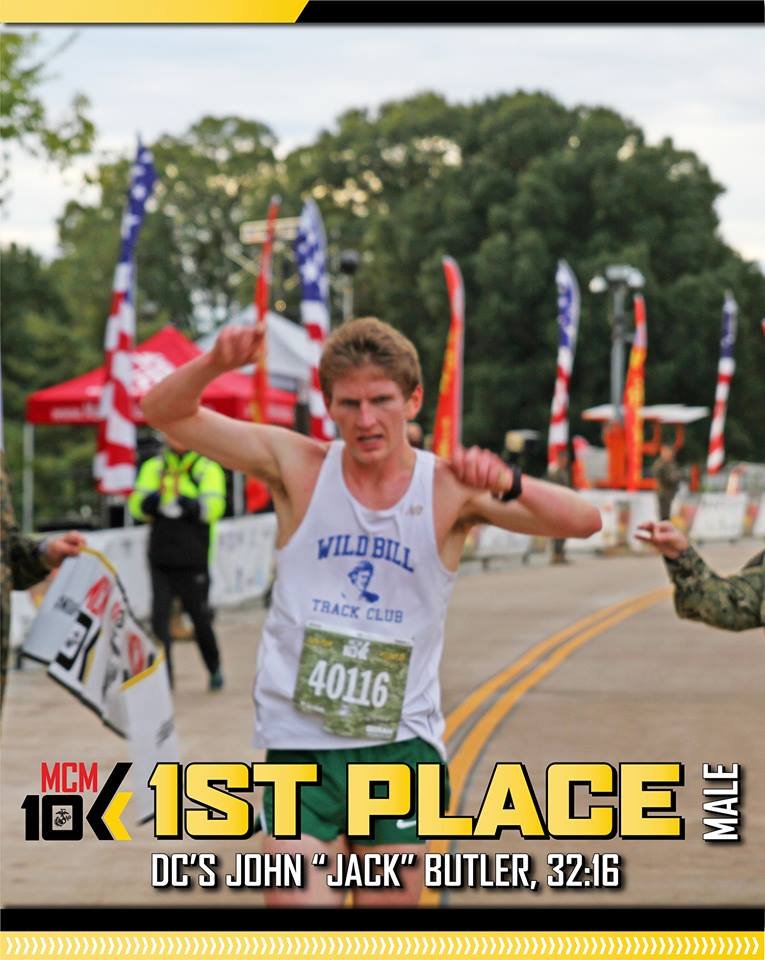
It became a much more real story at the beginning of March. One of the first significant American outbreaks was centered around the New York City suburb of New Rochelle, not far from where I now lived and worked; one of the first known infected commuted into midtown Manhattan daily. Because of the delayed-onset nature of this coronavirus, he may have done so before he was diagnosed. As a result of this, during the first week of March, I began to take the outbreak a bit more seriously. I became a compulsive handwasher, and felt a newfound gratitude for the bottle of hand sanitizer that my new apartment’s previous occupants had left behind. I had two phone conversations with distant friends, both of which featured coronavirus heavily (with cameos by coronavirus conspiracies positing even more malice by the Chinese government than is yet known). I was somewhat nervous about using a bathroom in Central Park on a run (but did it anyway). I tried to avoid actually touching door handles as much as possible. And I also tentatively told my Cincinnati family that, if I felt things were starting to get bad, I would probably come home. And on Sunday evening (after I won a 10k, where I nervously used portapotties), my anxiety increased when the priest at St. Josephs’s in Yorkville gave a series of coronavirus guidelines: no communion on the tongue, no holy water in baptismal fonts, no sign of peace. This was the first time the virus actually affected my life. 

At the start of the 10k I won. 

Over the second week of March, my concern became much more elevated. In the prior week, I had begun to wonder if I should alter my commute, for which I had been using the Times Square-42nd Street Station, surely one of the busiest -- and germiest -- in the city. That Monday, though, I did not end up doing so. But as the number of people wearing medical masks around the city -- and on the subway -- continued its ominous (and foolish) rise, my paranoia likewise increased. I tried consciously to touch what other people did as little as possible, and also, obviously to avoid accidental brushes up against others. I even tried to stop two of my worse habits: touching my face, and spitting on sidewalks (the latter ingrained from many years of running). I did all of this on Monday, March 9, the first day I would say I was truly anxious about coronavirus.

This ended up being the last day I commuted into my midtown office. My employer had already offered working from home as an option before any of this began, and it was already part of my regular routine. The conversations I had about the outbreak at work that day, and the news of its growing spread, ultimately convinced me not to go into the office for at least a day or two. On Tuesday morning, I ran through Central Park, as had become part of my incipient New York routine. Near the end of the run, though, I felt a pain in my right hamstring. A combination of coronavirus commute anxiety and a desire to be able to stay home to ice and rest kept me out of the office that day. During my day at home, I happened to page through my copy of Paradise Lost . . . and opened it right to the page where Adam is shown all the diseases that the Fall of man will unleash into the world.  


Heretical bibliomancy.

I spent most of Wednesday taking in news about the outbreak’s spread, only leaving my apartment once that day. By the end of the day, I hadn’t decided yet whether I would leave New York. But the increasing spread, and measures, both real and rumored, of the local and state government, began to make me nervous.

***

After my Thursday morning run, I decided I would leave New York, shortly after receiving an official recommendation to work from home indefinitely from my employer and securing position to do so. I’m not sure what was the final straw for me; if I’m being honest, it may have been the unsubstantiated rumors I was hearing of a citywide shutdown. But my ultimate rationale was something like this: New York may or may not completely shut down. The same could happen in Ohio. But most of my family and many of my friends were in Ohio, and it was a place I knew well. Whereas I had just gotten to New York, and was still figuring the place out. New York has many merits. But it was not the place I wanted to be in the worst-case scenario, a reality I reasoned we were approaching. So back to Ohio it was. I wanted to leave as quickly as possible, and was hoping that flights would be cheap, as I’d heard they were due to plummeting demand for tickets. This didn’t end up being the case, but I didn’t care. I just wanted to get home. Which is why I also hailed an Uber to get me from my apartment to LaGuardia airport. A few weeks earlier, navigating to that airport for the first time, I underestimated the duration of the trip and missed a flight; I did not want to do that again. This would also avoid having to use the subway again before leaving, a boon for germ avoidance.

Before my departure, I packed carefully, but quickly. I tried not to think about it too much, because I just knew that I wouldn’t be able to take everything I had worked so hard (and so recently!) to get into my apartment back with me, and would have to be parsimonious. I left with only a travel suitcase and a carry-on, which seemed almost embarrassingly sparse, but I could not imagine an alternative given my circumstances. I also consumed as much of my perishable food as I could manage, and told my roommate that the rest was fair game for him. He had not yet made plans to leave, though I suggested he do so (I have learned since that he did). I left my apartment without much ceremony. Perhaps I should have given it more of a last look, since I truly didn’t know when I would return. But I suppose I didn’t want to give myself enough time to think about all of this.

I got into the Uber at around 4:30 pm for a 6:55 pm flight. It wasn’t supposed to be rush hour yet. But the Upper East Side, through which most of the trip took place, was quite crowded. At this time, already pretty much fully consumed by coronavirus paranoia, my feelings grew somewhat ominous. As I sat helpless in unmoving traffic somewhere between my apartment and the airport, a scene popped into my head, unbidden: a passerby walking unassumingly but quickly up to the car I was in then suddenly smashing the glass of one of the windows. I don’t know why I thought of this. Fortunately, it ended up being nothing more than a dark imagining, and I arrived at the airport without incident.

The airport, however, presented a new obstacle. There aren’t many more germ-intensive environments than airports; coronavirus had already taken advantage of them in its spread. So I made some resolutions before entering: to touch directly as little as possible; to wash my hands compulsively; and to open my mouth only when necessary. Despite some deeply ingrained habits, and the exigencies of the TSA line -- where my luggage had to be screened twice for some reason, and where I received what I considered an unusually aggressive pat down from a TSA agent (just a few days after news reports revealed that a TSA agent at one airport had tested positive for coronavirus) -- I mostly succeeded at this. Though my paranoia about every stray cough and sneeze, building over the past few days, was now peaking as a result. And I tried as best as I could to avoid overly close proximity with people when I could.

Now, I just to wait for my flight. While doing so, I half-watched airport CNN and half-read the book I had brought with me (The Gods Themselves by Isaac Asimov). More important, I finalized my arrangements upon arrival to Cincinnati, my destination. I asked one of my sisters who still lived there if she could pick me up; she said yes. Demonstrating a knowledge of COVID-19 more developed than my own, she then suggested something I had not even considered: that I should stay either with her or my other Cincinnati-residing sister, at least for the first few days of my return home, to minimize any possible transmission risk to my 60something parents, as older demographics tend to be more susceptible to serious damage from the disease. I decided she was right, and agreed that she would take me to my older sister’s home from the airport (as she had a guest room with a bed). But I still had to get to Cincinnati. Once I boarded my flight, my anxiety to depart increased. And was not relieved: a half-hour after the plane was supposed to take off, it was still idle on the runway. I began to worry that some bizarre event would prevent its departure. Fortunately, this was another dark imagining, and a great weight lifted from my shoulders when it got into the air. On the flight, I opened my mouth only for occasional deep breaths, but otherwise did not even refill my water bottle or take a drink from it. I was very thirsty by the end of the flight (and very bored, since I finished my book early on in the flight; and thank goodness, because it was pretty bad).

***

My sister greeted me at the airport -- along her dog, a 20-week-old Australian shepherd named Ringo. We spent the drive back to and then through Cincinnati to my other sister’s house keeping Ringo occupied, discussing coronavirus, and listening to music (the SiriusXM Beatles’ station; Ringo is named after Ringo Star). She confessed to me that she had been listening to many podcasts about it, the source of her elevated knowledge. We proceeded in this fashion until we arrived at my older sister’s house, where Ringo briefly interacted with Piper and Frankie, my older sister’s dogs. I then went to bed not long after this, and awoke to Friday, my first day in Cincinnati, still a little bewildered I was there at all. But I tried as best as I could to maintain my routines: running in the morning (in an area somewhat but not entirely familiar to me), working during the day, etc. I was home by myself with my older sister’s dogs for most of the day, and they made good but quirky company (though Frankie’s habit of chewing on toilet paper has taken on a curious valence in this time, for reasons I shall explain below).


Frankie liked The Gods Themselves more than I did. Before this, she was playing with it in her mouth. 
Saturday was a day to relax, unwind . . . and figure out what I wanted to do running-wise. I delayed the starting of my run, typically a workout of some kind on Saturday, long enough to receive an email that the Cherry Blossom 10-miler, a race I’d registered for which had been scheduled for April 5, was canceled. This threw my training into uncertainty; I tend to be somewhat unfocused and unmotivated when I don’t have a race I’m training toward. I eventually just decided on a fartlek, a non-specialized, segment-differing/rest-constant workout of the sort I can always do for at least some benefit. I had also waited long enough for a kind of wintry mix to begin (reinforcing how underpacked I was for colder weather). I did the workout in this weather at Otto Armleider and Lunken parks, popular running areas that were not entirely empty today, but which nonetheless gave off a strange, apocalyptic vibe to me. But the world didn’t end while I was out there, and I eventually returned, doing little for the rest of the day.

First thing on Sunday, I went for a long run almost entirely on the Little Miami Bike Trail, a rail-to-trail that hugs the Little Miami River from Xenia to its feeding into the Ohio River. I ran north, and the trail was mostly empty. I couldn’t stop myself from spitting, though I tried to avoid doing it while people were around. But as I did so, I kept thinking that, if I were vector of coronavirus, I would be conveniently spreading it 9 miles throughout the East Side of Cincinnati. But I felt fine, and eventually finished the run, spending a good deal of time eating afterward. Later that day, my sister returned to her house, and so did one of my cousins, just a few years younger than I, for a family dinner. While we hoped not to be violating the new cultural imperative of “social distancing” (a strange formulation urging people to avoid large groups and close contact), we talked, unavoidably, about coronavirus. And near the end of the dinner, both my cousin and I confronted coronavirus-related decisions. Mike DeWine, the governor of Ohio, had just announced the bars and restaurants would soon be closed, with only carry-out allowed (the state had already closed all school buildings, with schools now forced to educate online indefinitely). A student at a local college, my cousin wanted to join his friends at their favorite local bar, thinking it may be his last chance to do so before the end of the school year. And I had to decide whether to attend church. Every Ohio archdiocese had formally dispensed Catholics of the requirement to attend Mass for the rest of the month. But Catholic guilt is a powerful force. Eventually, my cousin decided to go to the bar. And I decided to go to church.


It was a strange experience. The mass may or may not have been more populated than usual; everyone was so spread out that I couldn’t really tell. There was no music. There was no communion wine. And, most important, there was no sign of peace. Nor was there even any acknowledgment of its absence; Father simply proceeded as though it had never been a part of the mass. I nonetheless made liberal use of hand sanitizer in my sister’s car before mass, in the church after mass ended, and in her car again when I returned to it. Though it probably wasn’t necessary to go there, I’m glad I went. (And was made even happier when I learned later that all masses in the archdiocese of Cincinnati had been canceled for the rest of Lent.)

On Monday, I hoped to restore a semblance of normalcy to my life. And for the most part, I did: a morning run, followed my first office conference call since arriving in Cincinnati. Amusingly, it went somewhat longer than usual, probably because these calls were having to do a lot more heavy lifting now that we were all remote from each other indefinitely. I did my work from my sister’s home while keeping the dogs entertained. My sister brought home food ordered carry-out from The Works, a local restaurant we both love and wanted to support in this unusual time, and had that for dinner. It felt . . . almost normal.

I had my first real coronavirus reality interruption of my Cincinnati life the next day. After a fairly normal day, my sister came home and said I could go to the grocery store if I wanted to get things that she hand’t. I decided I did want to go, partly for the more prosaic reason . . . and partly because I wanted to see if all the things I’d been hearing about grocery stores without pasta, hand sanitizer, or, for some reason, toilet paper were true. So I went. It was true. All of it. And even more: I discovered upon entering the Mariemont Kroger that it had imposed a two-item limit on loaves of bread, gallons of milk, and cartons of eggs. 


I thought this was America. 
And I also found that nearly all of the spaghetti had disappeared (except for a gluten-free brand, and a select brand that, in a kind of cosmic insult, cost exactly as much as spaghetti does for me in New York, thus defeating my hope to take advantage of Midwestern prices while I am here).

They'll never run out of this. 
Meanwhile, most of the lasagna, rigatoni, and other pasta types that people don’t really understand was still there.

People really don't know to make lasagna.
And yes, there really was no toilet paper. Not a single roll. (Hence the danger of Frankie’s habit.)


I forgot to take a regular picture of the toilet paper section, so you'll have to make do with my Snap story.

I had never seen anything like it. Cincinnatians occasionally make runs on the grocery store in anticipation of snowstorms (many of which never actually come). But this…this was something different. I was still able to get most of what I had come for, but it was still surreal to see something like this in real life.

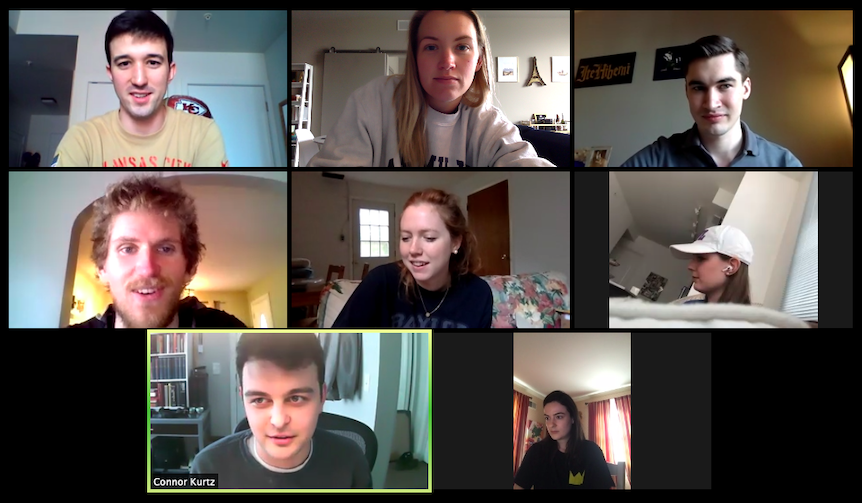
Wednesday was as normal a day as I can expect to have in this strange time, with one exception. Well . . . three, actually. That was the number of times I used the videoconferencing software Zoom to have conversations with people I was not physically present with. The first of these was for work, and is a normal part of my professional life in this new job. Though again, this call went longer than is typical, as it must now substitute for a great deal of other social interaction. The second was with former coworkers and now friends from my previous job. We often ate lunch together there, and one of them had the idea to simulate it by holding such a call during the lunch hour. It was a useful catchup, and a window into life in D.C., from where many of them were calling.


Image
The first Zoom. 
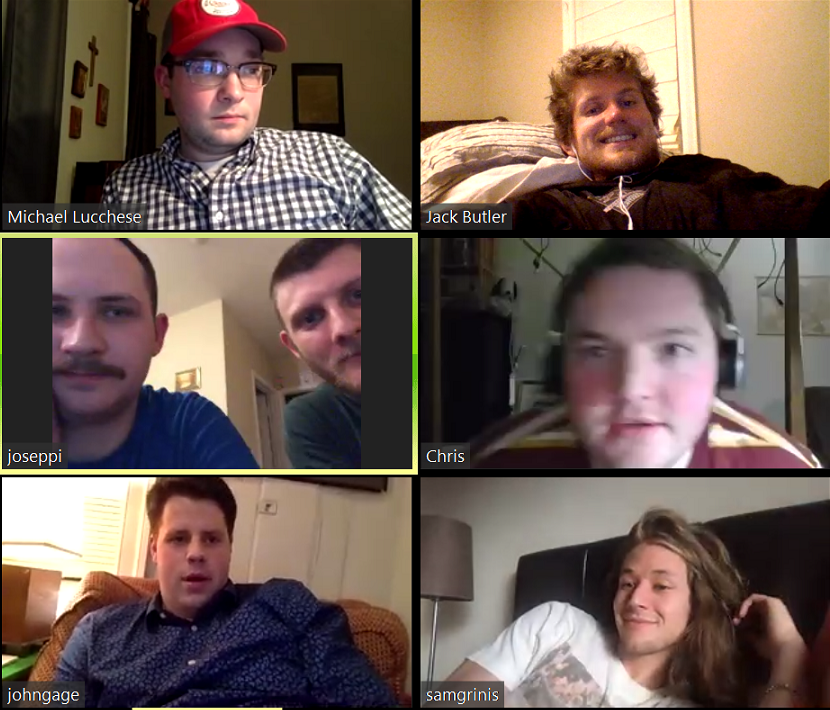
And the last conference call was of my instigation, with a separate group of friends from D.C. My old D.C. apartment was the setting of what we called “Boys’ Night,” a gathering of “the boys” on Wednesday evenings just to hang out. In the wake of social distancing and public closures, Boys’ Night had been canceled physically. While I had accepted the reality of no longer attending in person, I sensed an opportunity when it was disrupted completely, and arranged for a digital version. It was a success; the boys were brought back together, and it was almost like we were in person together again. Almost.

Image
The day's second Zoom. 


***

And that brings me to today. By COVID-19 standards, it’s been a pretty normal day: morning run, morning conference call, hanging out with the dogs, carry-out dinner brought home by my sister -- this time, from Paxton’s, another local favorite. But today, I also decided to end this phase of my coronavirus life by returning to my parents’ house. My sister has been kind to me, and would surely continue this kindness indefinitely, but I no longer wish to burden her, and am more confident of my capacity to function autonomously at my parents’ abode, as my intent is not to burden them either. And most important, I feel no symptoms for what might be coronavirus. I will still be very careful around them when I am home. But I do not think that, by doing so, I am being one of those selfish youths who thinks himself indestructible and forgets that he interacts regularly with those who are not.

Undoubtedly, this will not be the end of COVID-19’s impact on my life. It has already dislodged me from my living arrangements and forced me into an entirely new routine, though one made slightly more comfortable by the fact that I get to build it in a familiar environment. But I think I will soon grow accustomed to this life, for however long I have to live it, and thus it will increasingly grow less worthy of comment (unless these perpetual rumors of statewide "shelter-in-place" prove true, which I doubt). My experience has not been unusual, but it doesn’t have to be weird for something this bizarre in the first place. Unlike any news story I can remember, this is a real factor in the lives of just about everyone I know, and we are all affected by it in some way, and also striving to live as normally as possible -- a strange combination.

At such a time, it seems weird to say, but I am, on the whole, grateful. For having left New York. For having a job I can do remotely (something unavailable to many). For having a place where I could go in the presence of family (and friends, once I am comfortable seeing them again). For having time to complete a project that, while I doubt it will rival the work of Isaac Newton, will be of great importance to me -- and, eventually, to others, I hope -- once finished. And I am grateful, obviously, that I have avoided the disease so far, and hope that as many people as possible share this fate. We don’t know yet whether COVID-19 will prove as devastating as either the London plague or the Black Death; we can pray that it is not. But either way, it has already earned a place in history, one that it is our strange lot to live through.

Sunday, February 2, 2020

The Closing of the American House (for me)


Lording over what was my domain. 
I lived in four apartments during my time in Washington, D.C., which has now come to a close. But I only lived in the most important one of them for two months.

We call it Allan Bloom, for reasons too idiosyncratic to explain here. But the fact that it had a name at all might suggest its importance. It's relatively common on college campuses for houses to be named; outside of that bizarre world that often skews young adults' perception of how reality ought to work, it's rare that youthful urban dwellers even get a building to themselves, much less desire to name it. But against all of this, Allan Bloom stands as a glorious exception.

For almost a year before I actually lived in this Northeast D.C. house, Allan Bloom was the staging ground of my social life. I was there at least once a week. And it gave me plenty of reasons to stop by. Boys' Night on Wednesdays, a casual gathering of just guys being dudes, giving each other the kind of companionship and camaraderie that sadly too many these days lack. Regular parties, for which our surprisingly spacious abode is strikingly well-suited. And perhaps best of all, the impromptu trips, times I showed up when I had nothing else to do and just wanted to do it with friends. I even slept on the couch and cooked there...and all of that before I even moved in!

Naturally, I was thrilled by the opportunity to move in. It seemed I had found the perfect place. The most space I'd yet had in Washington, and I got to share it with people I considered good friends. A convenient location, with all the necessary amenities, and many good running routes. Regular chances to see friends of mine who didn't live there. I imagined that I would live there, happily, for as long as I lived in Washington, D.C.

Image may contain: Jack Butler, Michael Lucchese, Nic Rowan and John Gage, people smiling
The boys of Allan Bloom 
And that was true. It's just that my time in D.C. didn't end up lasting as long as I thought it would. When a dream job offer came my way that would take me out of D.C., one of the biggest factors influencing me to stay was Allan Bloom, and the social world of which it was the focal point. I had worked and waited years for such an ideal situation. I suddenly found myself in a cheesy romantic comedy, where I literally had to choose between my personal life and my career. But this was a false dichotomy. For even though I leave the house, I do not leave the friendship of its residents.

Hint hint...
Still, I cannot deny that my time at Allan Bloom has come to an end. On the surface, it seems like a kind of farce. Going through some of the painful motions of moving, it has felt that way at times. Moving stuff down our main staircase, I relived very recent memories of moving those same things up it just a few weeks prior. I only had a week or two, really, of actually living there, with all of my stuff in its desirable configuration, under the assumption that I would stay indefinitely. I  As my housemates helped me move out, I recalled their recent efforts helping me move in, doubling the debt of gratitude I owe them. But none of this can make the reality, the finality, of my departure any less sad.

Though leaving Allan Bloom should not be only an occasion of sadness. I thought it was going to be my Shire; instead, it ended up as my Rivendell, a place where I could rest for the next stage of my journey. I ended my time in D.C. in the best possible position: among friends, in a place that I loved.  For despite living there for only two months, the brunt of my non-professional life was there: hanging out, partying, eating, sleeping, doing nothing, and more. In this respect, Allan Bloom reaches a status much like my old college house, one that is now sadly long gone. I didn't think I'd ever again live in a place of which I would be that fond. And unlike that one, I'll be able to come back and visit, and someone else will get the chance to enjoy it. Maybe I'll even find occasion to sleep here. Though next time, I'll have to sleep on the couch.

Again.

My even older domain 

Friday, December 20, 2019

Waiting for Skywalker


Image result for the force awakens table read
Table read for The Force Awakens. How bored was Mark Hamill?
I have written a lot about Star Wars on this blog, far more than I expected. The second thing I wrote for it was a long "preaction" to The Force Awakens that was originally a Facebook note, but which was so long and unwieldy in that format that I decided to make a blog to house and similar thoughts. In the years since, I've defended The Force Awakens, made the case for my casting as Han Solo, attempted to predict what Episode VIII, what became The Last Jedi, would be like, and even defended that movie despite its straying from many of my expectations. There have been other things as well; you can peruse them all, if you like.

In all that time, though, there is at least one thing about Star Wars I have not noted, perhaps because it is a trifling observation that may not even be worthy of transcription. But it's my blog, so you will not stop me. Take another look at the picture at the top of this page. This is the table read for The Force Awakens, the first time the cast members for that 2015 movie read through the J.J. Abrams and Lawrence Kasdan script for the first Star Wars movie since 2005, and the first to move the story forward since 1983. This was, if I recall correctly, the first production image for the movie. We had no idea what to expect of it then. What a heady time it was!

We know a bit more now. And one thing we know specifically about The Force Awakens is that Mark Hamill, who portrays original trilogy hero Luke Skywalker...does not actually have any lines in that first new movie. He appears at the very end, wordlessly staring at the lightsaber presented to him by new trilogy hero Rey. And then...the movie ends. Given that he was actually present for the entire table read of the new movie, I have begun to wonder: How bored was he, just sitting there, waiting, as everyone else said lines? Who knows. But that's it. Now that that's out of the way, I've nothing left to say about Star Wars...

...I'm kidding. Of course I do. Everyone does. Nowadays, it's just one of those things you're expected to have an opinion about. How Star Wars reached this status, I'm not exactly sure. You could call it a consequence of the conquest of pop culture by nerds, or by nostalgia, by both, or a variety of other things. But in no way can I pretend to be immune. I grew up watching the prequel trilogy, the true extent of whose badness I did not fathom until after my childhood. Before them, I saw the original trilogy, though I think for some reason that the first one I saw was Return of the Jedi. And if anything, my fandom was cemented by many hours wasted playing Star Wars: Battlefront on PS2 both in my basement and the basements of many friends. I was successfully propagandized into Star Wars fandom years ago, and was, as a result, one of many people who eagerly bought tickets for The Force Awakens in 2015.

My ticket to The Force Awakens
But the place of Star Wars in popular culture has become a complicated thing since then, adding a new wrinkle to a fandom that hasn't really been completely happy since 1980. The Force Awakens, though one of the most popular movies of all time, quickly came under criticism for being derivative, which I thought was a bit unfair; I became a defender of the movie. And in 2017, The Last Jedi became one of the most controversial movies in recent memory. Why exactly this was, I'm not sure; I more or less enjoyed it, despite not being a huge fan, and after not knowing exactly what to make of it after my first viewing. If I had to guess why The Last Jedi has been so divisive, I'd say it's that the movie's decision to attack or alter some fundamental aspects of Star Wars, such as they are, made people more open to seeing the flaws that had been present in every movie.

And so The Rise of Skywalker, the concluding entry in this new trilogy, enters theaters under a cloud of skepticism. Star Wars fans once again feel like they can't trust the people making their movies, which is an oddly familiar feeling for a supposedly venerable franchise. I will be seeing it tomorrow, and I genuinely have no idea what to expect. But before I do, I want to attempt to make sense of this new trilogy's reception, and of Star Wars more generally and its place in popular culture.

In certain ways, the first Star Wars movie, now known as A New Hope, was truly groundbreaking in 1977. Its popularity changed the movie industry, maybe forever. And many people who saw it then, as well as subsequent generations of people who saw it as children later, wrapped up their youthful conception of the movie inextricably with childhood itself. Some people of my generation have come to regard The Phantom Menace and the prequel trilogy similarly, though this is a bit more dubious. (Don't let anyone tell you those movies are good. They're not. Nor are they somehow more worthwhile because they attempted to do something new; they didn't.) Either way, though, Star Wars has come to mean a great deal to many people.

A long time ago, all the way back in 1977...
It was many of these people, the ones who were children when the original movies first came out, who have reacted most strongly against this new trilogy. Some part of their inner self holds these movies to an impossibly high standard, and rebels against the very idea that anything could possibly be as good as what they knew when they were younger. For these and other people, this new trilogy probably never would have been good enough. Make the movie too familiar, and they'd decry its lack of originality; make it too unusual, and they'd say their childhoods had been ruined. This specific sense of ownership of Star Wars by its fans likely accounts at least partly for why many have "criticized" the new movies by supplying the fan fiction they would have rather seen filmed instead (something you could accuse me of doing, but I wrote mine before the movie came out, and did my best to judge what was ultimately released on its own terms). For now that someone other than the original creators is working on the movies, they don't see the need to respect what is on screen, and perhaps imagine that they could do a better job "playing with the toys" than some Hollywood rando. This is not to say the new trilogy has been perfect, or to excuse its faults. But I question the possibility that it could have ever truly satisfied everyone's idea of what Star Wars should be.

This is in part because I have come to believe that Star Wars has never really been great. At its best, the movies have themselves been derivative, of things like Flash Gordon, the World War II bomber movie The Dam Busters (from which the much-ballyhooed climax of the first Star Wars movie steals much of its dialogue word-for-word), of Akira Kurosawa and David Lean, of Frank Herbert's Dune, and much more. Indeed, before the original trilogy was even over, it was already being derivative of itself, what with another Death Star, returns to Tatooine and Dagobah, etc. This is to say nothing of Star Wars' creator George Lucas' insistence that his prequel trilogy "rhymes" with the original trilogy, or the extent to which the original movie itself would have been a mess if not for studio-enforced discipline and editing. Hence I question how much one can really say that Star Wars ever really was great.

I also question how much scope for truly interesting things there actually is in this universe. So far, virtually the entirety of Star Wars has dealt with a roughly 60-year period in a civilization thousands of years old. And even in the now-decanonized expanded universe stuff, the things that happen both before and after this narrow sliver of Star Wars history ultimately recur in a cyclical pattern that just keeps resetting. The good guys rule. Then the bad guys come in, mess everything up. Then the good guys come back against long odds and win again. Then then good guys rule. Then the bad guys come in, mess everything up. Rinse, lather, repeat.

Until Darth Jar Jar comes along, that is. 
Things may never change in Star Wars. But they have in my life. Since 2015, when The Force Awakens came out, I have done, watched, and read many things. But the two most relevant for this discussion are two book series I have read, one for the first time in a while, and one for the first time ever. In the fall of 2018, I reread The Lord of the Rings trilogy for the first time since 2003 (I was a nerdy kid, I'll admit it). Doing so, I noticed again all of its wonderful world-building detail, and reminded myself that, for a few years, I was much more of a Lord of the Rings nerd than a Star Wars nerd. And I was also reminded how much more depth there was to that series, both in book and movie form (though the two are more distinct than I remembered). I think this has made Lord of the Rings return to primacy in my inner hierarchy of fandoms.

But if it's not Lord of the Rings, then Frank Herbert's Dune and its first three sequels now reign supreme for me. I had known about Dune for a while, but only in the summer of 2016 did I actually get around to reading it. I was immediately plunged into an immersive, mystical world, featuring a millennia-old quasi-religious sect attempting to manipulating events to its end on a grand cosmic scale, sandworms, a desert planet, a tribe inhabiting it, and a young hero who goes on an epic quest, learning great powers along the way, and ultimately defeating a great evil. Further books introduce elements such as a pair of twins with psychic powers, a worm with a human face, an evil organization attempting to manipulate events to its end on a grand cosmic scale, and...okay, all right, surely you get the picture by now. Dune came out in 1965. Star Wars came out in 1977. I can't accuse George Lucas of outright plagiarism, but...come on. Even better, Dune is immensely more complex than Star Wars, despite attempts by some to make Star Wars more intellectually sophisticated than any legitimate reading of its universe can sustain. All of this is to say that next December, when a new adaptation of Dune comes out, I will be insufferable, and ready to forget Star Wars completely.

Pictured: Better than Star Wars. 
In the meantime, I will still see The Rise of Skywalker. I may like it, or I may not. But I will not be angry if it is a bad movie. Nor am I closed to the possibility that it may be a good one. These are just movies, in the end. They not need be psychologically-charged affairs, whose perceived failure is some great affront to people's childhoods, or a sign that society is decadent, or any number of things that too many adults have read into movies ultimately made for children. Star Wars has never really been anything more than a Dune ripoff monomyth story with some good cinematography. And the reaction to the movies that have come out in the past few years, more than the movies themselves, have made me tired of these movies, and of anyone believing they ought to be more than they are. Disney, one of the world's biggest corporations, doesn't need me to defend Star Wars. But I will also not be dragged into the world of Internet hyperbole in attacking them. If this means I am a hypocrite for abandoning what some could sensibly perceive as a recent Star Wars obsession, or one with a greater vintage, then so be it. Because people who are waiting for a Star Wars movie, of all things, to make them happy will be waiting for Skywalker for a long time.

In closing, I think again of what Alec Guinness reportedly thought of Star Wars fans after his role as Obi-Wan Kenobi made his later years quite comfortable. They are words that are worth recalling as yet another generation produces its takes on Star Wars:
In the final volume of the book A Positively Final Appearance (1997), Guinness recounts grudgingly giving an autograph to a young fan who claimed to have watched Star Wars over 100 times, on the condition that the boy promise to stop watching the film, because, as Guinness told him, "this is going to be an ill effect on your life." The fan was stunned at first, but later thanked him (though some sources say it went differently). Guinness is quoted as saying: "'Well,' I said, 'do you think you could promise never to see Star Wars again?' He burst into tears. His mother drew herself up to an immense height. 'What a dreadful thing to say to a child!' she barked, and dragged the poor kid away. Maybe she was right but I just hope the lad, now in his thirties, is not living in a fantasy world of secondhand, childish banalities."

Friday, November 1, 2019

Reflections on 10 years since a near-victory for St. Xavier Cross Country

No photo description available.
A distant triumph. (You'll find me humbly placed at the lower left.)

It's a weird thing to live your life by a TV commercial. But I try to. I'm thinking of the DirectTV Rob Lowe ads. In the commercials, the suave, normal Rob Lowe we know and love is a DirectTV customer. The ads contrast him with an unsavory counterpart, always a cable customer. One of these is "peaked in high school Rob Lowe," a washed out loser obsessed with his old trophies and clinging to distant memories of long-vanished greatness. (He, of course, is a cable customer.) Uncle Rico, from the 2004 movie Napoleon Dynamite, is also on my mind in this regard. A temporary caretaker for Napoleon and his brother Kip, Rico claims to have been able to throw the pigskin a quarter mile as a high schooler. He ruminates wistfully about his past greatness, wondering what would have happened if coach had put him in in the fourth quarter. "I could have gone pro," he sadly intones. To live this way--thinking incessantly about what was and might have been--is very tempting, very human. I'd be lying if I said I never did it myself. But, as I said, I try not to.

For a couple of reasons, that's been a little hard of late. I write this on November 1, near the peak of fall, my favorite season. Washington, D.C., where I currently live, just had its first truly chilly day. I reveled in it, feeling the cool winds and watching as they continued to tear the remaining leaves off of warm-colored trees. It's not just the weather, though, that makes me love this season. It's the thing I associate perhaps most with fall: cross country, the sport that dominated eight years of my life. It has deeply imprinted itself on my identity, and given me powerful positive associations with not just something as obvious as fall, but even little, obscure things. The smell and feel of cold sweat. The scent of wet leaves. Even the odor of a portable toilet, either clean or...not. These things, and many others, have marked my experience of cross country since its very beginning, and mingle in my memory.

And they were present in full form exactly ten years ago, in the fall of 2009, the year that I helped Cincinnati St. Xavier Cross Country to...a 2nd place finish at the OHSAA cross country meet. That tomorrow a very strong St.X team looks to add another 1st place finish to our program's collection has also made it difficult for me not to think of this part of my past. Along with the still hard to believe fact that a full decade has passed since that fall, a time of ups and downs, friendships and memories, triumphs and near-misses. At the risk of indulging in my inner Peaked In High School Rob Lowe/Uncle Rico, I shall now recall that fall, trying to think more of what was, and not what might have been, and to try to make sense of it from my vantage point in the precarious present. 

The regular season itself went well, helping our team to figure out which members would constitute its all-important top 7. They would represent it in further competition. I ended up a member of that top 7, though this was not at all guaranteed. In fact, the summer before, I had nearly quit the team, frustrated by my lack of progress. I ultimately did not (with some prodding by a perceptive coach), and what a stroke of luck that turned out to be. Over the course of that season, I established myself as one of four runners who would always lead the team in races, though I never did so during the course of the regular competition. Regardless, it was a satisfactory process, vanquishing long-held doubts that had begun to take root about my potential.

But the real fun began at the Greater Catholic League conference meet. Then held at Rapid Run Park, it had for decades hosted a furious and often unpredictable competition between St.X and its rival all-male Catholics schools in the GCL South: Lasalle, Elder, and Moeller. The hilly, uneven course was known to be tough, ending on a famous uphill. Yet, curiously, personal bests often occurred there, perhaps because claiming it was a 5k was a noble lie passed around the GCL. On that cool, sunny morning in October, St.X came to the line the slight favorites. But other schools were good enough that we certainly could not assume victory.

Image may contain: one or more people, people standing, child, grass, outdoor and nature
Near race end, my teammate Chris Hanson and I vie with an Elder runner for GCL South victory.
Not long after the race began, St.X formed into its by then customary four-pack, with Eric Gruenbacher, Chris Hanson, Gus Walter, and I running together near the very front of the race. As I began to sense that Hanson was having a good day, and that I still felt like I was too, I stuck with him as he and Elder's Josh Makin began to separate from the lead pack in the race's last mile. Up the race's final hill, I kept contact with them, losing it slightly in its final straightaway as Chris and Josh kicked furiously for GCL South bragging rights (overall rights having already been secured by Carroll's Chadd Kiggins). When I finished the race, I discovered that Josh had only just outkicked Chris, finishing 3rd overall, with me 4th in 15:59. When the race finished, St.X ended up the clear winner.

No photo description available.
Post-finish euphoria as I approach Chris Hanson. 
The next week, at the Southwest Ohio District championships, a target was on St.X's back. Our coach told us as much a few days before, when we learned how the race, always split in two, shook out. It turned out that our race would involve a rematch with Lasalle, always a worthy competitor, and a first competition against Lakota West, quite strong that year. He told us, as though it were inside information, that these teams would be trying to upset us. And he told us that we couldn't let that happen.

Another surprise awaited us on the day of the race itself: the weather. I have never raced in worse weather than I did that day. It was mid-30s, windy, and raining. And it had been that way for days beforehand, leaving the course a muddy wreck, pockmarked by puddles. I got to the race's startline nervous...and cold. The moment the gun went off, my teammate Chris, lined up in front of me, slipped on a patch of mud. He recovered quickly, but it wasn't a great omen. It turned out to mean nothing, however. For on that day, something was different, indescribably different, for me. Less than a mile in, I was already at the front of the pack. I felt no pain. I giddily tromped through puddles like a child. I whistled, sang, and laughed as the race progressed, despite--or, as I have long concluded, because of--the adverse conditions. It was simply a blast. Only once since that day have I felt anything like it: In the last few miles of my 1st place finish in the 2018 Flying Pig Half-Marathon. 

Image may contain: one or more people, people standing, sky, outdoor and nature
Early on, you can already see the smile on my face. 
I spent the bulk of the race at the head of the pack, running alongside Eric and Sycamore's Nick Fry. But as the race neared its end, I left Eric, who had performed valiantly, behind, and Nick and I decided to see who had the most guts. In the final straightaway, I distinctly remember someone yelling at Nick something like, "Come on, you can do it! He's fading!" To which I audibly responded, "Like Hell I am!" and engaged my finishing kick. I wish I could tell you that it was enough, and that I rode to a triumphant 1st place finish. But I did not. I had to settle for 2nd (foreshadowing, perhaps). But St.X itself did not settle at all, securing 1st place once more, thanks to great performances from the rest of the team. We came in knowing others wanted to upset us, but we upset them by winning instead.

No photo description available.
Having a blast. 
In hindsight, it is easy to say that the team was now due for a setback. Or at least that I myself was. Fortunately for the team, only the latter ended up true. At the windy plains of Troy (,Ohio), St.X came a victorious envoy, looking to conquer further. The competition would be fierce once more, and we were once again the target of many, even more so than the previous meet. Added to this was the historical curiosity that, at the time, St.X had won more State championships than Regional championships. All of this combined to make me, if not the team at large, somewhat nervous. And for reasons still not entirely clear to me, all these years later, I underperformed that day, ending up only the team's fourth man, 17th overall in 16:43. But the team was there for me in this, in more ways than one. Eric, Chris, and Gus seamlessly shuffled the team order, picking up the slack that I had left, and securing for us a first place victory once more.

Image may contain: one or more people and people standing
Victorious once more. 
This was not the only way the team was there for me, however. Experiencing my first disappointment of the post-season, just after what was then the best race of my life (and still is one of the best), I was disappointed in myself. I felt I had failed the team, failed to meet the high expectations I now set for myself. Whether that was true or not, my teammates were there for me, supporting me when I was down, remembering that I had done the same for them, and might soon again. There is a special bond that comes from being on a team, especially--in my view--a cross country team, and I felt it more powerfully that day when I most needed it than I had on those easy days when I had perhaps undervalued it.

Image may contain: one or more people and people standing
Eric giving me support. 
With another victory notched in our belt, we moved on to the state meet. At that now-distant time, it was still held at the legendary course of Scioto Downs, a proving ground of champions, a venue full of history, intensity, and unpredictability. Here, for the first time since the post-season had begun, we were not the favorites coming in, though we were considered one of several contenders. I got to leave school mid-day the day before the meet, to wear my post-season jacket to school, and to run the Columbus-area course the day before. I had no idea what was going to happen the next day. But nobody else did either. As our coach liked to say each week a new poll ranking the teams came out, the only poll that mattered was the one they took after the state meet.

I came to the line with an intense, nervous energy that defied my usual attempt at pre-race calm. But I think it was needed, for this, the last race of the season. I started out moderately, hanging behind my teammates, not wanting to burn out as a first-time competitor at this race. Somewhere around the halfway point, though, my deliberate momentum carried me up to my teammate Eric, who had up to that point been our leader in this race. We talked briefly as we ran next to each other. He told me to go ahead. So I did. I did not see any of my teammates for the rest of the race, though I discovered after we had finished that Chris and Eric had finished just behind my 16:28, 24th overall finish. Gus and my fellow then-junior Greg Sanders followed in the high-16s.

There was a time, after the race, when we did not know if we had won or not. Our coaches, counting during it, had reason to believe we may well have. For a few minutes, we waited in our team camp, living in a twilight realm of ambiguity. Soon, though, the announcement came. We had finished...2nd, to Cleveland St. Ignatius, our brother Jesuit school (members of whose winning team I have come to befriend over the years). 2nd place. We did not win. But we would get a trophy, and a chance to hoist it atop that vaunted podium. It wasn't what we wanted, or what we hoped for. But it wasn't nothing, either. We were all euphoric as we walked back over to the team that had been there for us today no less than it had been all season long, that team we were honored to represent.

Image may contain: one or more people, people standing, shoes, child and outdoor
Walking back euphoric to the team camp. I'm in the middle. 
Even though standing atop that podium remains one of my most cherished memories, I remember it only as something of a blissful blur. With a huge smile on my face, I said little. I accepted a place on the podium perhaps lower than I had earned, content to let the seniors have their day, and to let my deeds speak for themselves. It didn't really seem to matter anyway. When we stood there, we were one. Eric, who had led us for most of the season, without whom we wouldn't have made it anywhere this far, got to hold the trophy aloft with his own hands. But we were all holding it, really. Every member of that team. Myself very much among them.

No photo description available.
A distant triumph. (You'll find me humbly placed at the lower left.)
I did get to hold the trophy myself eventually. I got plenty of pictures with it, in fact; my teammates were happy to let me hold it. But it wasn't really about the trophy, to me. It was about all we had done together, all those miles, all those memories, all those now distant and half-remembered things we couldn't even begin to explain to someone who wasn't there, and which we might now even have trouble explaining to ourselves, if we remember them at all. And it was about the team, whose greatness we had our chance to represent and embody, like those before us--many of whom were also in attendance--before we ourselves would have to step back and let others embody it on our behalf. We were but the temporary manifestation of something that had existed long before us and would go on long after us. The moment belonged to us, to be sure. But really it belonged to all of St.Xavier Cross Country.

Image may contain: one or more people
They let me hold the trophy. But I didn't get to keep it. It wasn't really mine anyway.
I think often about that day, that season, that fall. My nostalgic recollection of it began before it even ended. When I had returned home, luxuriating in my post-race bliss, I caught Braveheart on TV, the very end, when the wistful Scottish theme plays as Robert the Bruce leads an army to avenge William Wallace. For some reason, it fit the moment perfectly, encapsulating all the happiness for what we had done, and the sadness for its all being over.

For it is, indeed, over. It has been for a long time, and will only keep receding further into the past, and into memory. Even most of the courses on which I ran these races have changed, leaving my own recollections one of the few ways to experience them viscerally still. At times, I will confess to an Uncle Rico-level bitterness about what might have been, or what has happened since. Failure to win overall, or to get myself on the podium as a top individual finisher, meant that neither our team performance that year nor mine as an individual have come to be regarded, as I had hoped, as a resounding highlight in the annals of St. Xavier Cross Country. Respectable, admirable, sure. But not as impressive as some of what came before and after. Now, our second place trophy sits collecting dust somewhere in a St.X trophy case behind some more impressive gold ones the team secured since. And I had no direct role in those gold trophies, something that had been my hope in getting 2nd as a junior, one of the reasons I was at the time content to let the seniors have their moment; I felt assured of my own the following year. Yet no such gold trophies awaited my senior year, nor any truly legacy-securing performance individually. In my darkest moments, I cast this second place finish, and what followed immediately after it, in a long line of personal shortcomings, accepting as my lot in life a seeming inability to achieve true greatness, to come close enough to it only to know what true greatness might be like.

But these are my darkest moments. And they do not represent the totality. Outside of them, I fondly recall the friendships and memories formed over that incredible season. I still consider my teammates from that year close friends; I still recall fondly that which we did together, from the serious and triumphant to the mundane and even to the silly. Those days represent maybe the best example I'll ever get of what John L. Parker Jr. in Once A Runner called "...the easy fond intimacy that sports give to young men in groups and that they would consciously or subconsciously miss for the rest of their lives."

While fondly recalling the past, I also do my best to live in the present, and for the future. When it comes to running, I did not end up as Peaked In High School Rob Lowe. I continued running seriously in college, and still do now after graduating; you can get a sense of what I have done here. In a strange way, not getting exactly what I wanted on that November day in 2009 has kept me out there, pounding pavement, continuing to search for it. I may never find it. But I resolved long ago to keep looking for it as long as I could.

So best of luck to St.Xavier Cross Country tomorrow, as it attempts to secure for our illustrious program another 1st place trophy. A whole season culminates in this race, and its chosen representatives are surely ready for it. But whatever happens, they and the team they represent should know that what they do today will not come to an end at the finish line. The miles, the races, the friendships, the memories, and the team will be with them always.

If they're lucky, they may even feel inspired to blog about it, 10 years later.

Image may contain: one or more people, people standing, sky, outdoor and nature
You might call it a...Life Between Runs. 

Sunday, July 7, 2019

I felt quite alive in my year 25

Looking more like an adult as I age, even if I don't always act like one
One of the unexpected things I've found about post-academic young adulthood is that liberation from the academic calendar has not liberated me from the need to organize my life by some calendar. I guess I shouldn't have been surprised by this, but I didn't really think about it much in advance. Most people, I suppose, just use the calendar year itself. But the positioning of my birthday at almost exactly halfway through a calendar year has made me more desirous of measuring my life in birth-years instead.

As part of this mental framework, I have taken to summarizing the most important things that happen to me in each year of my life (as measured from birthday to birthday). You can read the entries for 23 and 24 here. (You may note that they feature attempts to divine significance from the numbers of my age in each year; no such attempt will be made here, as the only thing I can think of is my aging beyond the Obamacare-stipulated period of parental insurance eligibility.) Herewith follows the entry for 25, an age I am no longer, as I continue my aimless journey through my ambiguous 20s.

-In July 2018, I went on a trip to visit Nashville, Tennessee, where I'd never been, to visit a friend who lived there. We had a great weekend. Perhaps the highlight for me was visiting an anechoic (i.e., completely soundproofed) chamber at Vanderbilt University, an experience I described here.

Laying down sick beats in an anechoic chamber
-In August 2018, I competed in my second beer mile, running a 6:35, a 20-second PR.

Image
Just after completing my beer mile
Later that month, inspired by some of my recent travel experiences both in and out of America, I decided to go on a "tour" of my hometown of Cincinnati as though I weren't actually from there. The culmination of my tour was getting to the top of Carew Tower, Cincinnati's tallest publicly accessible building, and for the first time understanding Cincinnati's geography.

Image
The view from Carew
-As August turned to September, I journeyed to a slightly larger city--Chicago--for a weekend of pizza, friendship, and music. 
Image
A slice of  deep dish pizza from Lou Malnati's, which I enjoyed greatly

 -In September 2018, I participated in two races: the (now-defunct) Navy Five Miler, in which I was 3rd (25:58), and the Race for Kids 5k, a charity race organized by a friend, which I won (15:39). I then met with family and friends in Ann Arbor for a weekend in Michigan, checking my Michigan box for 2018.

When in Ann Arbor...
-In October 2018, I made technically my second-ever "business trip," traveling to Notre Dame for professional reasons that happened to dovetail nicely with personal ones. 

Image
When in South Bend...
Later that month, on October 28 to be precise, I won the Marine Corps 10k (watch the post-race interview here), recorded this podcast, and read at Mass (taking over from a friend who had run the marathon), all on the same day.

And this was only the first thing I did today. 


-In November 2018, I completed my triple 10k autumn with a pair of solid races: first, the Veterans' Day 10k, in which I got 3rd place but managed a lifetime P.R. of 31:03.

Thanks to Cody Christensen for this picture of that race's finish.
And then, of course, I ran the Cincinnati Thanksgiving Day Race, placing 2nd (again) to J.J. Weber (again) with a course best of 31:44.

Near the end of the race
For more on my triple 10k autumn, go here.

-In December 2018, in the safety of my own home just after Christmas, I suffered a freak accident that kept me from running for the next three weeks, throwing my long-gestating plans to compete in the Boston Marathon in 2019 into doubt.

-In January 2019, I recorded an entire podcast on the music of Electric Light Orchestra (ELO), my favorite non-Beatles band. You can listen to it here. I also continued a long effort to claw my way back into shape despite severe cold, an effort that continued through February 2019. That month, I also agreed to go on another St.X trip to Italy as a chaperone. 

-In March 2019, I did my first race since my freak accident: the Rock 'n' Roll Half Marathon, in which I ran the exact same time I did in the half marathon I ran before my first marathon: 1:12:39. My bib number was 12012 for this race; the bib number of the person just in front of me? 12011. Weird. I also recorded an entire podcast on The Silmarillion, a sort of Old Testament to The Lord of the Rings. Finally, at the end of the month, I returned to Michigan for reasons I hope become apparent to the world someday, but which I cannot currently reveal.

-April 2019 was one of the busiest months of my life. First, there was obviously the Boston Marathon, which I improbably made my way to despite all of the year's obstacles. I have already written at length about that here.

This picture was taken just after I finished. It's a good summary of how I felt

One week after Boston, I returned to Nashville for a friend's Bachelor Party. There, I played paintball and successfully heckled a live band at a bar into an amazing rendition of "Free Bird."

Image
I also discovered that my 7-year-old canteen looks a lot like a paintball canister
And the weekend after that, I ran three legs as part of a team for the American Odyssey Relay. The highlight of that experience for me was the inadvertent fulfillment of a long-held wish that came when I led myself on a Civil War battlefield tour at night (a "ghost tour"), as my second leg happened to take me through Antietam and Sharpsburg at 2 am, almost completely alone.

The team. We ended up 3rd overall
-In May 2019, I finished editing the first draft of my novel, which I guess means I produced a second draft of it. Someday I hope you'll all be able to read it!

-In June 2019, I returned to the Midwest for the wedding of which the aforementioned Bachelor Party was the prelude. And then I returned home (briefly) before heading off to Italy with my high school (again!). There are many pictures on Facebook, but this seems to be the most popular:

Image may contain: Jack Butler, smiling, standing and outdoor
At the Trevi Fountain, which was closed the last time I went

-In July 2019, my podcast celebrated its one-year anniversary. And today, on my 26th birthday, I finished reading Heretics of Dune, which seems appropriate, for some reason.

So there you have it: That was my life in my 25th year. I may not be able to arrest the passage of time, but as long as I make each year feel like it was full of life, then I can at least be happy with what I've done as the years continue to go by. Here's to being 26, whatever this year may bring.